This is an exercise I often do in brand workshops, and you should try it too. It’s called The Cool Wall (an idea borrowed from Top Gear). Label the left-hand side Not Cool. Label the right-hand side Really Cool. Then ask a group to place logos where they think they belong. That’s it. Sometimes it’s obvious. Sometimes it turns into an argument.
The point isn’t design or strategy. It’s emotion. What people feel about a brand in the moment, in the country they live in, shaped by what’s happening in the world.
This wall was built in Russia in 2012 for Ozon. You can see the admiration for western names, Apple, Nike, IKEA, Levi’s, and the distrust of local ones like Lada or RT. During the financial crisis, the same wall looked different. Banks slid to the far left. Confidence collapsed.
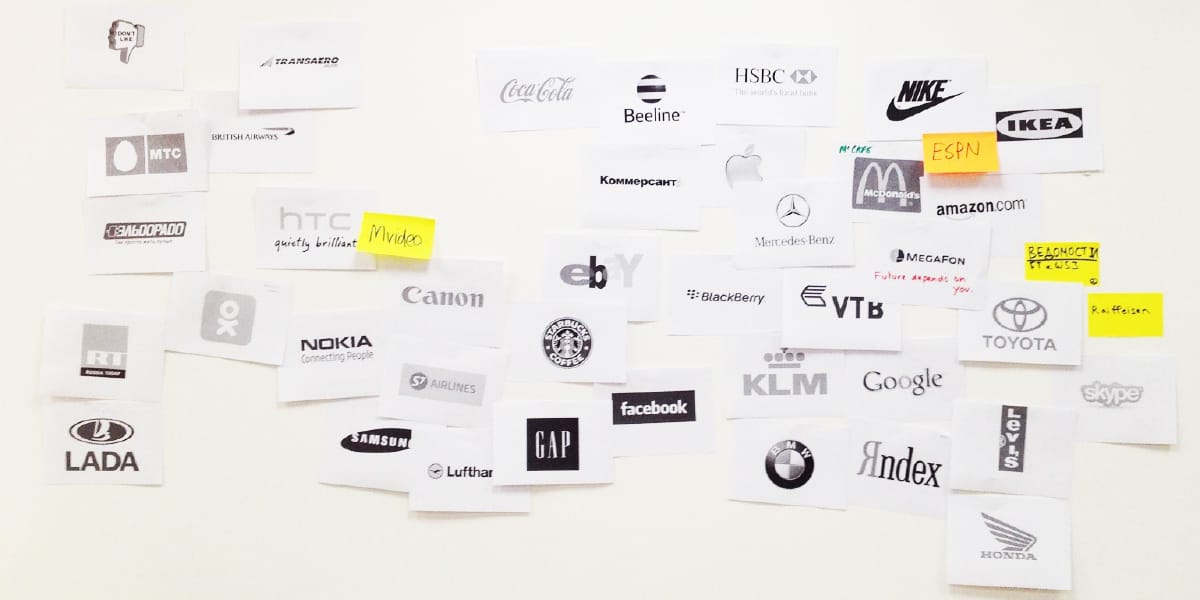
That’s the lesson. Cool isn’t fixed. It shifts with politics, culture and trust. A brand can be really cool one week and not cool the next, without changing a thing about itself.
So how do you control that influence? You can’t. But you can stay aware of it.
How cool is your brand? Can it stay cool? And who decides what cool really means?
Read the full Ozon case study here